 哩厚經書
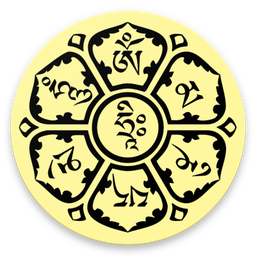
Om mani padme hum
六字真言
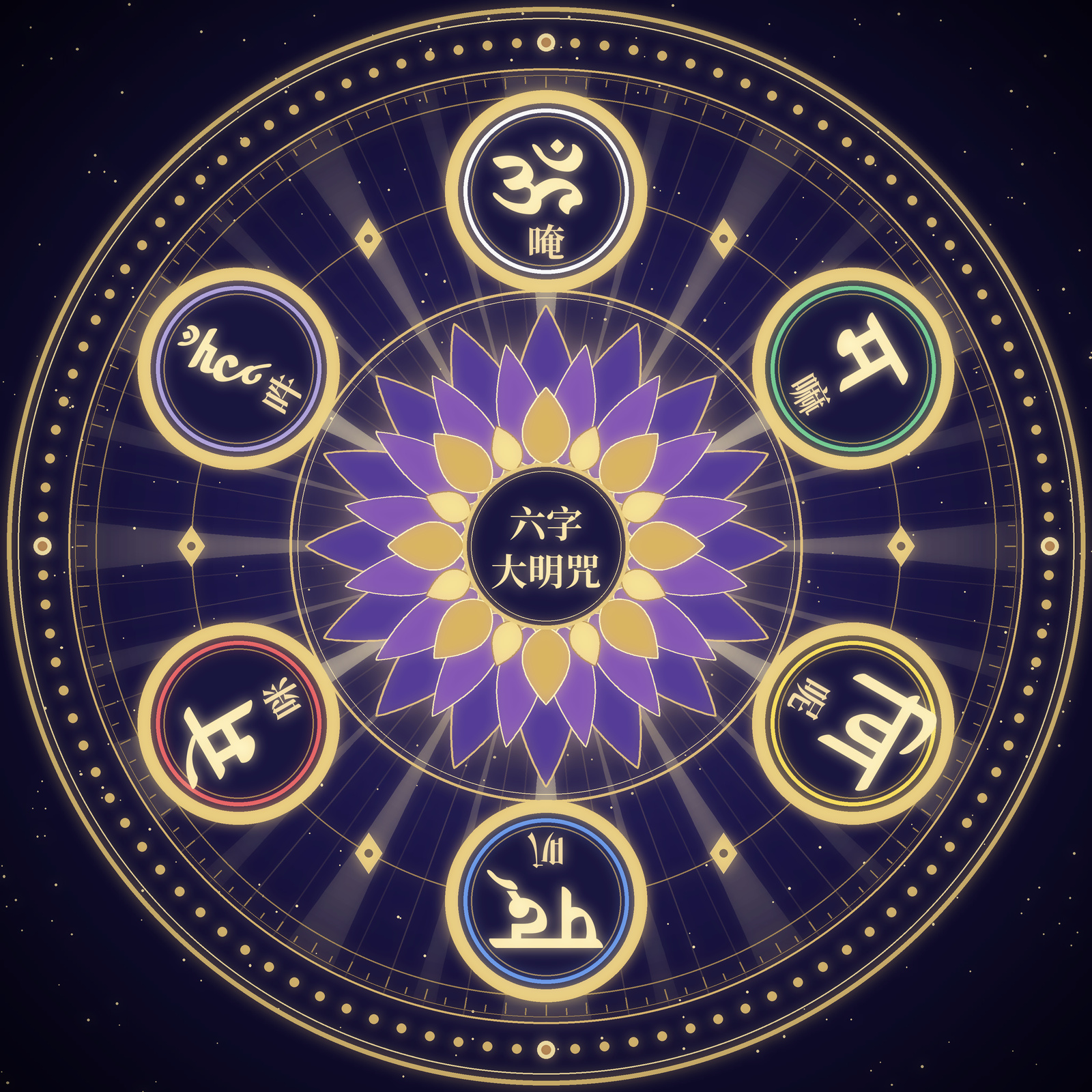
Om mani padme hum, the six-syllable mantra of Avalokiteśvara, is the mantra most often recited in Tibetan Buddhism.
For iPhone, iPad and Android · Free · No ads
Screenshots
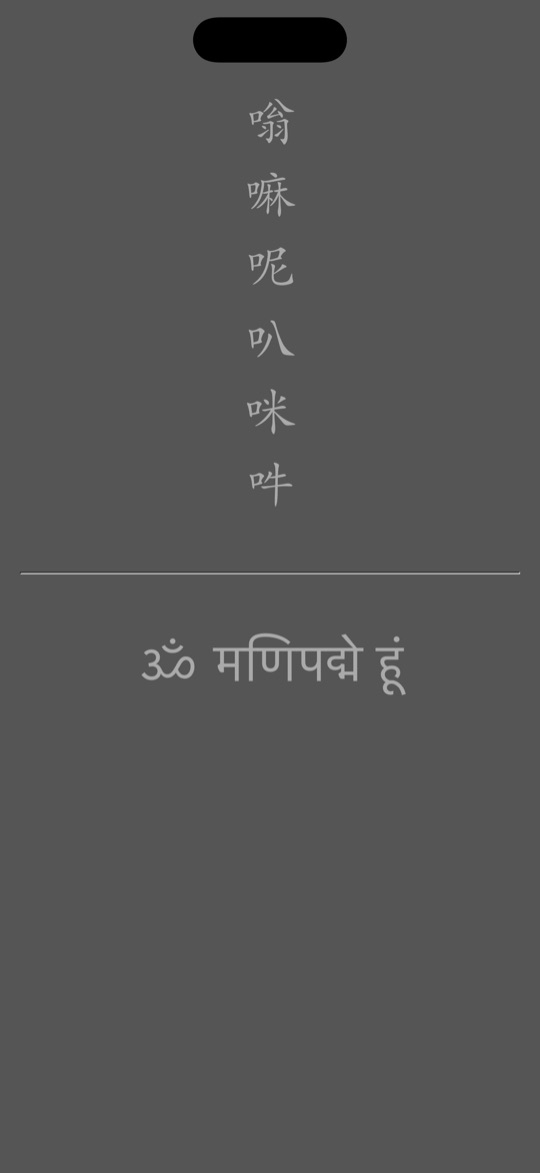
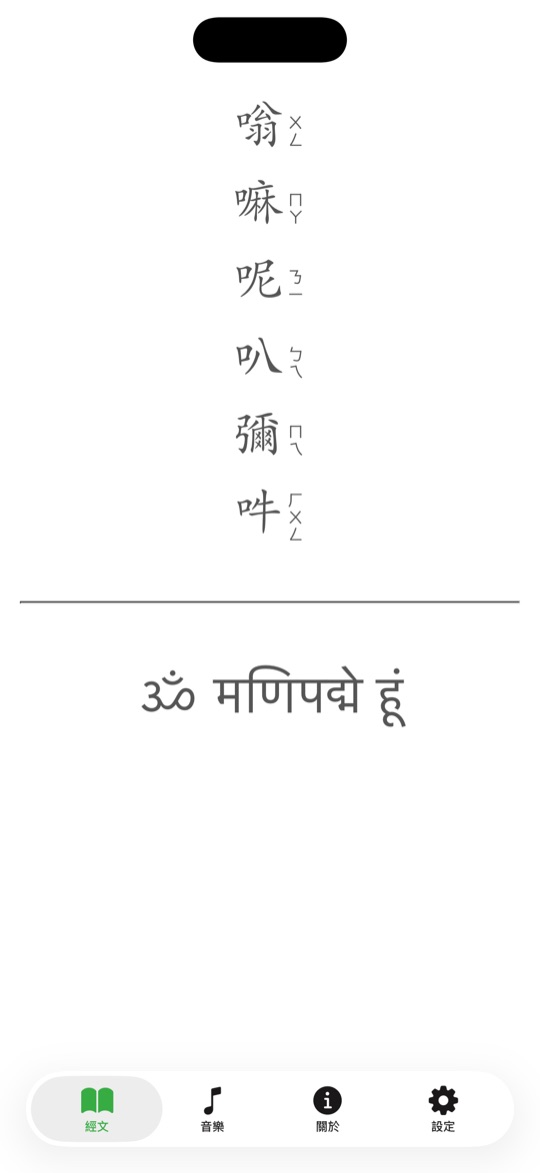

Chants
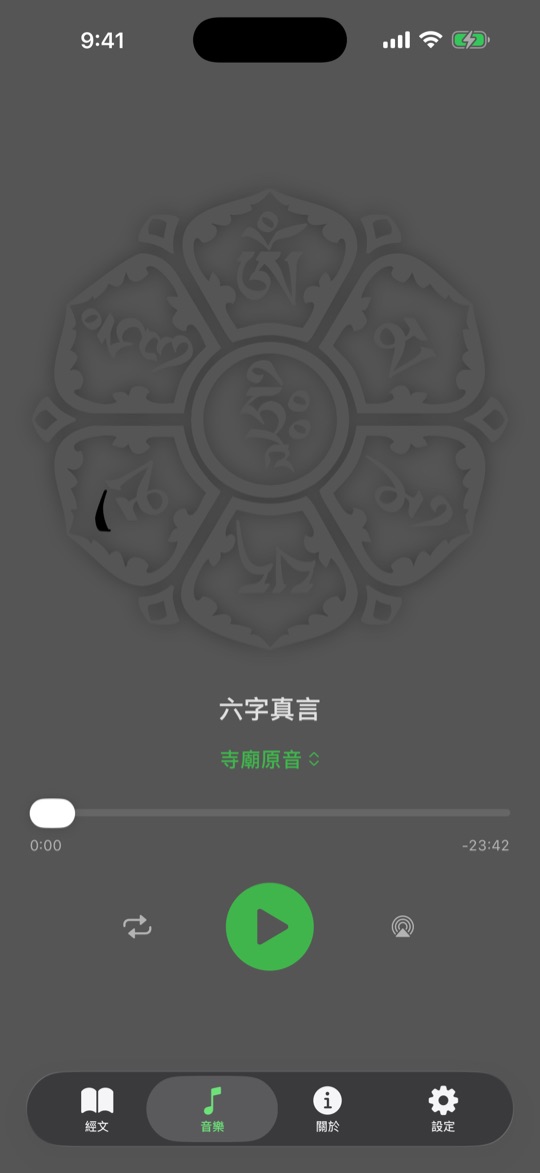
- Original Temple Mantra
- Unknown
- Read by Gopin Lay People
Text versions
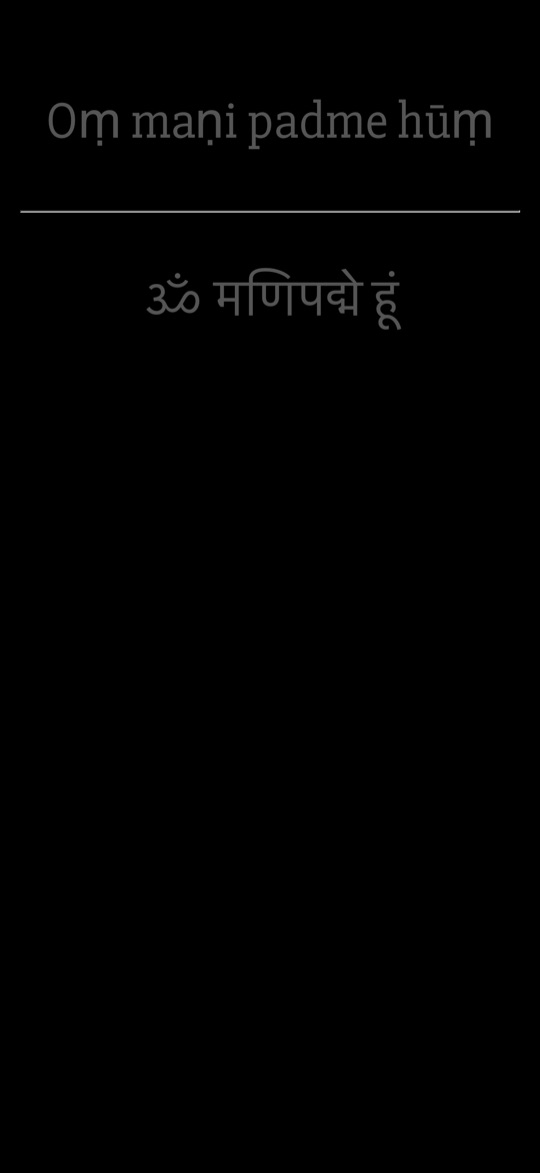
正體中文, 正體中文 - 注音, 简体中文, 简体中文 - 拼音, English, 日本語
Adjustable font size and a grey, black or white background; full-screen reading on iPhone and iPad.
About Om mani padme hum
Introduction
Oṃ maṇi padme hūṃ (Sanskrit: ॐ मणिपद्मे हूं) is the six-syllabled Sanskrit mantra particularly associated with the four-armed Shadakshari form of Avalokiteshvara, the bodhisattva of compassion. The first word Om is a sacred syllable found in Indian religions. The word Mani means "jewel" or "bead", Padme is the "lotus flower" (the Buddhist sacred flower), and Hum represents the spirit of enlightenment. It is commonly carved onto rocks, known as mani stones, or else it is written on paper which is inserted into prayer wheels. When an individual spins the wheel, it is said that the effect is the same as reciting the mantra as many times as it is duplicated within the wheel.